By Jessie Szalay, (3/3) Live Science Contributor
Jessie Szalay, Live Science Contributor, publishes an interesting article about watermelon, explaining the health benefits, risk & nutritional facts. The information below belongs to the article talking about health benefits and nutritional facts of the watermelon. You can read the complete article HERE.
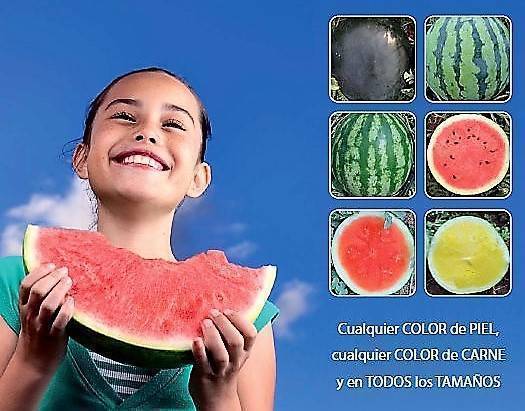
Image by Intersemillas
Some fun facts about watermelons, from the National Watermelon Promotion Board and Science Kids:
The watermelon (Citrullus lanatus) is related to cucumbers, pumpkins and squash.
The watermelon probably originated in the Kalahari Desert in Africa.
Egyptians placed watermelons in the burial tombs of kings to nourish them in the afterlife. The first recorded watermelon harvest is depicted in Egyptian hieroglyphics from about 5,000 years ago.
Merchants spread the use of watermelons along the Mediterranean Sea. By the 10th century, watermelons had found their way to China, which is now the world’s top producer of watermelons.
The Moors in the 13th century brought watermelons to Europe.
The watermelon likely made its way to the United States with African slaves.
Early explorers used watermelons as canteens.
The first cookbook published in the United States in 1776 contained a recipe for watermelon rind pickles.
About 200 to 300 varieties are grown in the United States and Mexico, but only about 50 varieties are very popular.
By weight, watermelon is the most consumed melon in the United States, followed by cantaloupe and honeydew.
The watermelon is the official state vegetable of Oklahoma.
All parts of a watermelon can be eaten, even the rind.
Guinness World Records says the world’s heaviest watermelon was grown by Lloyd Bright of Arkadelphia, Arkansas, in 2005. It weighed 268.8 lbs. (121.93 kg).
The United States ranks fifth in the worldwide production of watermelons. Forty-four states grow watermelons, with Florida, Texas, California, Georgia and Arizona leading the country in production.
A seedless watermelon is a sterile hybrid, which is created by crossing male pollen for a watermelon, containing 22 chromosomes per cell, with a female watermelon flower with 44 chromosomes per cell. When this seeded fruit matures, the small, white seed coats inside contain 33 chromosomes, rendering it sterile and incapable of producing seeds.
Source
Watermelon: Health Benefits, Risks & Nutrition Facts, by Jessie Szalay, Live Science Contributor
Watermelon – Health Benefits & Risks
Watermelon – Health Benefits